The Road to 2200: USCF Electronic Knights Finals
The Electronic Knights is THE USCF tournament for correspondence chess players. Here is my final update on my standing in Electronic Knights 2021 Finals.
Photo by Marek Studzinski on Unsplash
Introduction
Before sharing the latest updates on my progress in the Electronic Knights tournament, I want say thank you all for reading, comments and a special thank you to my supporters for the coffee.
I finished my last two games in the Electronic Knights Finals. And WOW, what a journey over the last 3 years!
There’s always something new to discover in chess. During the pandemic I signed up a US Chess Federation (USCF) membership and as a chess enthusiast with a long hiatus, this decision marked a significant turning point. After some test tournaments such as the Victor Palciauskas tournament I signed up for the Electronic Knights, which was played then via email.
Since 2024, the entire Electronic Knights tournament series moved to the ICCF platform but retained USCF Correspondence Chess Rules (engine-free). Players can register for up to ten sections. I initially competed in the preliminary rounds of two sections, 21EN09 and 21EN015. To my surprise, I advanced to the semifinals and then to the finals!
All games can be found in the tournament section of this webpage.
Electronic Knights 2021 - Finals
Section 21ENf01
First, let me highlight how long correspondence chess takes. This tournament started in 2021, and here we are—three years later—in the finals. That really sets things in perspective! USCF’s decision to move to the ICCF server with its engine-free format was a great one. It made playing much easier compared to email.
The finals started on January 19, 2024, and will end on July 19, 2026. As of May 2024, I broke into the Top 100 Correspondence Chess Players in the USA at Rank #73 with an ELO of 2099. Today, I’m proud to be ranked #67 with ELO of 2104!
For those curious about rating calculations, USCF provides an excellent guide on how ratings are calculated.
In the finals, the Weighted Score System brings everything together. Here’s how it works:
Original Weighted Points Formula
The weighted score combines the scores from the Preliminaries, Semifinals, and Finals, with later rounds often having higher weightage. Assuming the weightage is proportional (e.g., Finals are weighted higher than Semifinals, and Semifinals higher than Preliminaries), we calculate:
Weighted Points =
(Prelim Score) × W₁ + (Semi Score) × W₂ + (Final Score) × W₃
Where W₁, W₂, and W₃ are weight factors.
Scoring System Breakdown:
- Prelim Score: Each win counts as 1.0 point. Draws count as 0.5 points.
- Semi-final Score: Each win counts as 2.2 points. Draws count as 1.1 points.
-
Final Score: Each win counts as 4.5 points. Draws count as 2.25 points.
- W₁ = 1.0 (Preliminaries)
- W₂ = 2.2 (Semifinals)
- W₃ = 4.5 (Finals)
This system emphasizes the importance of all rounds. While two games are still ongoing, here’s the likely final ranking:
not official ranking under assumption Reger and Corkum win their game
| Rank | Player Name | Prelim Score | Semi-Final Score | Finals Score | Weighted Score |
|---|---|---|---|---|---|
| 1 | REGER, JEFFREY | 5 | 5.5 | 4 | 35.1 |
| 2 | BARCLAY, DEAN ARNE | 5.5 | 5.5 | 3.5 | 33.35 |
| 3 | CORKUM, TIM | 5 | 4.5 | 4 | 32.9 |
| 4 | BUSS, MICHAEL D | 5 | 5.5 | 3 | 30.6 |
| 5 | SCHROEER, EGBERT | 5.5 | 5 | 3 | 30.0 |
| 6 | WEINER, GERALD | 5.5 | 4 | 2 | 23.3 |
| 7 | NOHR, MATTHEW | 4.5 | 4 | 1.5 | 20.05 |
Cash prizes will be distributed as follows based on weighted-point scores as in Rule #12:
- First Place: $800.00, plus title of Golden/Electronic Knights Champion and a plaque
- Second Place: $500.00
- Third Place: $300.00
- Fourth-Tenth: $100.00 each.
Note: Prize fund based on 200 entries and will be increased or decreased proportionately per number of entries assigned. A minimum of 50% of each prize will be paid. Players who complete all games and do not qualify for the Semi-final round will receive a CC gift certificate valued at $10.00. Those who complete all three rounds with no forfeit losses will receive a tournament pin and be eligible to win prize money depending on their weighted-point score.
You can find a summary about my opponenents in the tournament section.
Having finished my last two games (both drawn), I’m very likely to end 5th place—depending on the outcome of the final games. Stay tuned!
Enjoy!
1. Game Analysis: Buss, Michael
This might be my fourth game against Michael in correspondence chess, and as always, it featured high-level play. Let’s dissect the key moments and explore what likely cost White the win.
Annotated Game
Have a look at the annotated game below for a detailed move-by-move breakdown, including my thoughts and variations during the game. I then captured, highlighted and reflected on the critical moments.
[Event "USCF/2021 Electronic Knights Final/21ENf01"]
[Site "ICCF"]
[Date "????.??.??"]
[Round "?"]
[White "Schroeer, Egbert"]
[Black "Buss, Michael D"]
[Result "1/2-1/2"]
[ECO "A34"]
[WhiteElo "2137"]
[BlackElo "2154"]
[Annotator "Schroeer,Egbert"]
[PlyCount "126"]
[GameId "489232844374"]
[EventDate "2024.01.19"]
[EventType "corr"]

1. Nf3 g6 2. e4 (2. c4 Bg7 3. Nc3 c5 4. e3 Nf6 5. Be2 O-O 6. O-O d5) 2... Bg7
{Pushing me out of my comfort zone and main line?} 3. d4 c5 4. c4 Qa5+ 5. Nc3
Nc6 6. d5 {1-0 Koestner,W (2314)-Bendig,F (2309) BdF/Diamant/10 (GER) corr ICCF
2019 ICCF to 2022} Nd4 7. Bd2 Nxf3+ 8. Qxf3 d6 9. Be2 {A40: Unusual replies to 1
d4.} Nf6 {[%cal Bg8f6,Bf6e8,Be8g7]} 10. h3 {½-½ Laube,B (2405)-Baklanov,V (2461)
Baltic Sea tt8 bd4 corr ICCF 2008 [4] ICCF to 2022} O-O 11. O-O {White is
better.} Qb6 $146 {Baklanov layed here 11... a6} ({Predecessor:} 11... a6 12.
Rab1 Qc7 13. Qd3 Bd7 14. b4 b6 15. Rfc1 Rfb8 16. Bg5 Be8 17. Qe3 cxb4 18. Rxb4
{½-½ Laube,B (2405)-Baklanov,V (2461) Baltic Sea tt8 B04 email ICCF email 2008})
12. b3 a6 {[%cal Gf3g3,Gf2f4]} 13. Qg3 Qd8 14. Rad1 Ne8 15. f4 Rb8 ({Black
should try} 15... Bd7 16. Bd3 Bd4+ 17. Kh1 Qc7) 16. Bd3 Qc7 17. Kh1 Bd7 18. a4
Bd4 19. Qf3 {let the pawn roll to g4} Ng7 20. Ne2 {Nxd4 is the strong threat.}
Bf6 21. g4 ({White should play} 21. Nc3) 21... b5 $16 22. g5 Bd4 23. Nxd4 cxd4
24. f5 {Hoping for f6.} (24. cxb5 axb5 25. a5 b4 $16) 24... bxc4 25. f6 $1 (25.
bxc4 $6 e5 $10) 25... exf6 26. gxf6 Nh5 (26... cxd3 $2 27. fxg7 f5 (27... Kxg7
28. Qf6+ Kg8 29. Bh6 {[%csl Yd3] Discovered Attack} Bxh3 30. Qg7#) 28. gxf8=Q+
$18 (28. gxf8=B Rxf8 29. Qxd3 Qd8 $18)) 27. Bxc4 {[%cal Yf1g1]} (27. bxc4 $6 Rb3
$10) 27... Rfe8 {[%cal Ye8e4]} 28. Rg1 {[%cal Yg8h8,Rd2h6] Attacking the ? .
Only move is Kh8} (28. Bxa6 Rxe4 29. Rf2 Rh4 $17) 28... Kh8 {[%cal Yd7a4]} 29.
Bh6 (29. Bxa6 Qc2 30. Bd3 Rxb3 $17) 29... Qb6 {[%csl Gb8,Gc8,Gd1,Gf1,Gh5][%cal
Rg1g5,Rh1h2,Rf3d3,Ye8e5,Ya6a5,Yb6d8] I think Mike made great moves in a row. I
still like my position. Should I first consider Rg5 in favor of Kh2? Rdf1 is an
option too, to move Rc1 probably. Rc8 is the thread, Rf1 restrains the Knight on
h5} 30. Rg5 {And now Rxh5 would win. White is much more active.} Re5 31. Rf1
{not sure if Kh2 is the better move here. If he takes Rxg5, Bxg5 I can attack
the Queen side with Rc1?} (31. Rxe5 {31.Rf1 1.00} dxe5 32. d6 $2 (32. Rf1 $1 $10
{and White is okay.}) 32... Qxd6 $19 33. Bxf7 Qxf6 {is losing}) 31... Qb7 {I
need to get K to h2 and out of the line of fire. What is the right move order?
Kh2, Qc8, Rxe5 or Rxe5, dxe5, Kh2 Threat: 32...Rxg5 33.Bxg5 Qb4 34.Rc1 Qa3 +/=}
32. Rxe5 (32. Qd3 {32.Rxe5 1.07 34...Bb5 hangs the bishop b5, exxchange Q (with
35.axb5), 36.Bxb5 sacs the trapped piece}) 32... dxe5 33. Kh2 {how to break
through? Rolling the pawn d6 doesn't work due to the Bishop} Qc8 {[%cal Yd7a4]}
34. Rc1 (34. Qd3 {34.Qg2 1.05} a5 $1 35. Qd2 Qc5 {doesn't help much}) 34... Qd8
35. Bxa6 {A strong pair of Bishops.} Qxf6 36. Qxf6+ Nxf6 37. Bb5 $1 Bxb5 38.
axb5 {Endgame. KRB-KRN. Strongly threatening Rc6.} Kg8 39. Rc6 $1 Nd7 {[%cal
Yd4d3] I have the feeling I'm losing my positional advantage.} (39... Nxe4 $2
{39...Nd7 0.83} 40. d6 $1 Nf6 {[%cal Yf6d7]} 41. b6 Nd7 42. b7 $1 {Intending
Rc8+ and mate.} f5 (42... Rxb7 {42...f6 4.53} 43. Rc8+ {and checkmate}) 43. Rc7
{I think this line is Black is losing. He can't take the pawn on b7 because of
checkmate}) (39... Nxe4 $2 40. d6 Nxd6 (40... Rxb5 41. Rc8#) 41. Rxd6 $18) 40.
Kg2 {Strongly threatening Rc7.} (40. Rc7 Nf6 41. Rc6 $1 Nd7 {[%cal Yd4d3]} 42.
Kg2 $1 {Black must now prevent Kf1. leads to Kg2 anyway. So I should play Kg2
right away.} f5 $1 43. Rc7 Nf6 44. Rg7+ $1 Kh8) 40... f5 41. Rc7 Nf6 42. Rg7+ $1
Kh8 {Hoping for ...Ng8.} 43. d6 $1 Ne8 $1 44. Rd7 Kg8 (44... Rxb5 45. Rd8)
(44... fxe4 45. b6 $16) 45. b6 $1 {aiming for exf5.} fxe4 {b4 or Kf1? With b4,
the line would be 46. b4 Rxb6 47. Rd8 Rxd6 48. Rxe8+ with Kf1, Black can play
e3. I might still then play b4 and end up the same. Not sure what is the
strongest. Gut feeling retreating the K seems to weaken the position even more}
(45... Rxb6 $2 46. Rd8 Rxd6 (46... Kf7 $2 47. d7 $18) 47. Rxe8+ Kf7 48. Rxe5
$18) 46. Kf2 (46. Kf1 $14) 46... e3+ $10 {The position is equal.} (46... Rxb6 $6
47. Rd8 e3+ (47... Rxd6 $2 48. Rxe8+ Kf7 49. Rxe5 $16) (47... Kf7 $2 48. d7 $18)
48. Ke1 Rxd6 (48... Kf7 $2 49. d7 $18) 49. Rxe8+ Kf7 50. Rxe5 $16) 47. Ke1
{Hoping for b4.} Rxb6 {[%cal Yg6g5] ...g5! would now be deadly.} 48. Rd8 Rxd6
(48... Kf7 $2 49. d7 Nd6 50. Rf8+ Ke6 51. d8=Q $18 (51. d8=B $2 Rxb3 52. Ke2
Rb2+ 53. Kd1 Rd2+ 54. Kc1 Rh2 $19)) 49. Rxe8+ {KRB-KR} Kf7 50. Rxe5 {And now Bg5
would win.} Kf6 51. Rg5 {Hoping for Rg4.} Rb6 (51... d3 {[%cal
Yh6e3,Yd3d2,Yg5g1] 51...Rb6 0.00} 52. Rg1 $1) 52. Rd5 Rb4 $1 53. Ke2 Ke6 $1 54.
Rd6+ {Decoy} Kf5 (54... Kxd6 $2 55. Bf8+ Kd5 56. Bxb4 $18) 55. Bf8 Rxb3 56. Rxd4
{Bh6 is the strong threat.} Rb2+ {is it safe to take with Kxe3?} 57. Kf3 (57.
Kxe3 {Hoping for Rb4.} Rb3+ 58. Rd3 Rxd3+ 59. Kxd3 Kg5 60. Be7+ (60. Ke4 $5 Kh4
$7 61. Kf3 Kxh3 62. Bh6 $14) 60... Kf4 61. Bf6 $10 {it's a draw} (61. Ke2 $5 g5
$7 62. Kf2 $18)) (57. Kxe3 Rb8 58. Rf4+ Kg5 59. Be7+ Kh6 $18) 57... g5 {Inhibits
Rf4+.} 58. Rd5+ (58. Kxe3 Rh2 59. h4 (59. Rd5+ Kg6 $14) 59... Rh3+ 60. Kf2 Rh2+
61. Kg3 Rxh4 62. Rd5+ (62. Rxh4 gxh4+ 63. Kh3 Ke4 $16) 62... Kg6 $14) 58... Ke6
59. Rd6+ (59. Rxg5 {[%cal Yg5e5] Black must now prevent Re5+! taking the pawn
loses the bishop} Rf2+ 60. Kxe3 Rxf8) (59. Rxg5 Rf2+ 60. Kxe3 Rxf8) 59... Kf7
60. Bh6 e2 61. Kf2 (61. Bxg5 e1=Q (61... e1=B 62. Kg4 $10) 62. Bf4 Qe2+ 63. Kg3
Qg2+ (63... Qh2+ {Checkmate scenario. is a self mate.} 64. Kg4 Qg2+ 65. Kh4 Rb4
66. Kh5 Rxf4 67. Rd7+ Ke8 68. Rg7 Qxh3+ 69. Kg5 Qh4#) 64. Kh4 Rb4 65. Rd7+ Ke8
66. Rxh7 Rxf4+ 67. Kh5 Rf5+ 68. Kh6 Qg5#) 61... Rb3 62. Bxg5 {Strongly
threatening h4.} Rxh3 63. Kxe2 {Michael rightfully claimed the draw based on
seven pieces tablebase} h5 {Blacks defense is rewarded with a draw. Weighted
Error Value: White=0.05 (flawless) /Black=0.03 (flawless) . Mistake: White=2
Black=1 OK: White=28 Black=26 Best: White=3 Black=7 Strong: White=4 Black=3}
1/2-1/2
Critical Moments
Move 21: g4
The move 21. g4 is aggressive, aiming to seize space and open attacking prospects on the kingside. However, it could have been better timed. A quieter move like 21. Nc3 would have maintained flexibility, addressed Black’s queenside counterplay, and kept White’s position solid. The pawn push weakens White’s structure, providing Black with targets for later exploitation.
Move 27: Bxc4
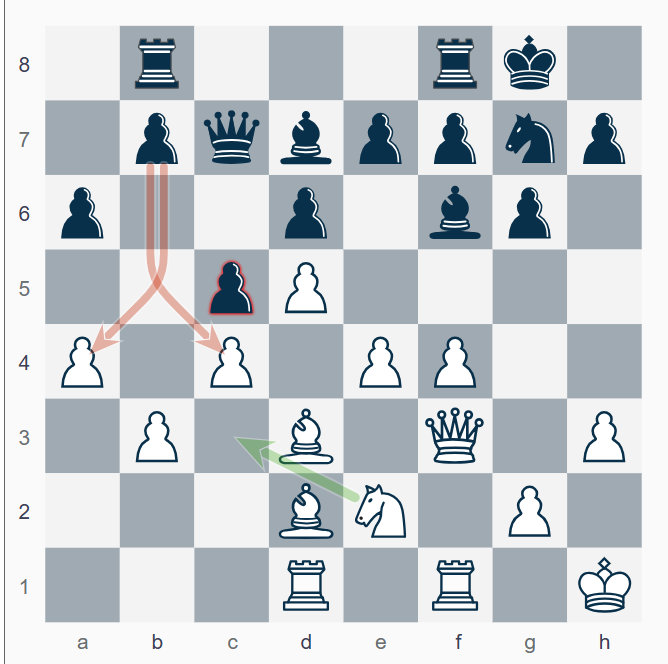
Black’s pawn sacrifice with 27. Bxc4 was a calculated attempt to activate pieces and generate counterplay. White’s acceptance of the pawn with 27. Bxc4 was correct and maintained the advantage. Declining the pawn with 27. bxc4 would have allowed Black’s rook to infiltrate with Rb3, creating significant activity. While White was correct to accept the sacrifice, this position demanded precise follow-up to consolidate and retain control.
Move 31: Rxe5
White voluntarily exchanges into a less dynamic structure with 31. Rxe5. The alternative 31. Rf1 would have kept the tension and preserved opportunities for dynamic play, including doubling rooks or pressing against Black’s kingside. By exchanging rooks, White reduces the complexity of the position and shifts towards an endgame that favors Black’s defensive chances.
Endgame Play
Move 36: Qxf6+
Simplifying into a rook-and-pawn endgame with 36. Qxf6+ was a turning point. While White retains a material edge, the queen exchange eliminates attacking chances and gives Black counterplay against White’s pawns. Keeping queens on the board would have preserved White’s initiative and kept Black on the defensive.
Move 45: b6
The move 45. b6 prematurely advances White’s passed pawn, forcing Black to stabilize the position. While logical, this move commits White to a specific plan and limits flexibility. A more patient approach, such as 45. Kf2, would have centralized the king and allowed White to maneuver while waiting for Black to commit.
What Cost White the Game?
White’s primary challenge in this game was converting advantages into a decisive win. Key issues include:
- Premature pawn pushes (e.g., g4, b6) created weaknesses that Black exploited for counterplay.
- Simplifications (e.g., Rxe5, Qxf6) reduced White’s attacking chances and allowed Black to escape into drawable positions.
- Missed improvements in critical moments, such as 21. Nc3 and maintaining tension with 31. Rf1, which could have kept White’s winning edge intact.
The game demonstrates the importance of balancing aggression with caution, particularly in correspondence chess, where deep analysis can uncover nuances missed during the game.
2. Game Analysis: Weiner, Jeff
Playing against Gerald (Jeff) Weiner is always an engaging experience. In this game, as Black, I managed to hold a draw in a challenging position. However, the game slipped out of my hands due to a combination of passive decisions, missed opportunities for counterplay, and suboptimal endgame coordination.
Stronger emphasis on dynamic play, particularly in the opening and middle game, and earlier activation of the king in the endgame, would have significantly enhanced my winning chances.
Annotated Game
My thoughts during the game are reflected in the annotations.
[Event "USCF/2021 Electronic Knights Final/21ENf01"]
[Site "ICCF"]
[Date "????.??.??"]
[Round "?"]
[White "Weiner, Jerry"]
[Black "Schroeer, Egbert"]
[Result "1/2-1/2"]
[ECO "B07"]
[WhiteElo "2157"]
[BlackElo "2137"]
[Annotator "Schroeer,Egbert"]
[PlyCount "130"]
[GameId "489232099681"]
[EventDate "2024.01.19"]
[EventType "corr"]

1. e4 d6 2. d4 Nf6 3. Nc3 g6 4. Be3 c6 5. Qd2 $5 Nbd7 $5 6. Nf3 $5 Bg7 7. Bh6
O-O 8. Bxg7 $5 {B08: Pirc Defence: Classical System. B08: Pirc Defence:
Classical System.} Kxg7 {½-½ Wharrier,J (2434)-Andersen,J (2308) ICCF World
Cup22 sf6 corr 2019 ICCF to 2022} 9. e5 Nd5 10. Nxd5 {White is slightly better.}
cxd5 11. O-O-O {½-½ Slavin,A (2364)-Piesik,P (2419) Titled Tuesday intern op
24th Jan Late Chess.com INT blitz 2023 (1) EXT 2024} Nb6 $146 {After this move,
we are on our own.} ({Predecessor:} 11... dxe5 12. dxe5 Nb6 13. Nd4 Qc7 14. f4
Bg4 15. Re1 e6 16. Kb1 Rac8 17. h3 Bf5 18. Nxf5+ exf5 {½-½ Slavin,A
(2364)-Piesik,P (2419) Titled Tuesday intern op 24th Jan Late Chess.com INT
blitz 2023 (1)}) 12. Re1 Bf5 $1 13. Bd3 e6 14. Bxf5 Nc4 15. Qb4 ({Better is} 15.
Qe2 $16 {Threatens to win with Bd3.} exf5 16. b3) 15... a5 $14 16. Qb5 gxf5 17.
b3 (17. Qxb7 $2 Rb8 18. Qa7 Rxb2 $19) 17... Nb6 18. a4 $36 {White has good
play.} Qc7 19. exd6 (19. Kb2 {is more complex.} Rfc8 20. Qd3 Nd7 21. g4) 19...
Qxd6 20. Ne5 Rfc8 21. Kb1 (21. Re3 $16 {aiming for Rg3+.} Rc7 22. Rg3+ Kf8 23.
Kb2) 21... Qc7 (21... Ra6 $1 $10 {keeps the balance.}) 22. Rc1 $1 $16 {Active
counter play!} Ra6 23. Ka2 $1 f6 24. Nd3 Nd7 {Prevents Nc5} 25. c4 dxc4 26. Rxc4
Rc6 27. Rhc1 {[%cal Bh1c1,Bc1c2,Bc2e2]} Qd6 28. Nb2 $5 (28. Qxa5 $6 Rxc4 29.
Rxc4 Rxc4 30. bxc4 Qxd4 $15 (30... Qxh2 $2 31. Qd8 $18)) (28. Qxb7 $142 {[%cal
Rc4c6]} Rxc4 29. bxc4) 28... Rxc4 {Remove Defender} 29. Nxc4 (29. Rxc4 Rxc4 30.
Qxc4 b6 $14) 29... Qd5 (29... Qxd4 30. Qxb7 Rc5 (30... Qxf2+ $2 31. Kb1 $18) 31.
Rc2 $16) 30. Rc2 (30. Qxa5 $2 {Errs by overreaching. loses.} Qxa5 (30... Qxd4
31. Rc2 $14) (30... Qxg2 31. Rc2 $16) 31. Nxa5 Rxc1 $19) 30... Qxb5 31. axb5
{Endgame. KRN-KRN. And now Re2 would win.} Nb6 32. Kb2 Nd5 33. Re2 ({But not}
33. Nxa5 Rb8 34. Nc4 f4 $16) 33... Re8 34. Nxa5 {Endgame RN-RN} b6 35. Nb7
{Hoping for Nd6.} Kg6 $1 $10 36. Rc2 Rb8 37. Nd6 {[%cal Rf5f4,Rf6f5]} f4 $1 38.
Rc6 f5 $1 {Prevents Ne4} 39. Nc4 {always look for potential checks to avoid,
right? That said, Kf6 it is} Kf6 40. h4 h5 41. b4 $5 Kf7 $1 {The position is
equal.} 42. Kb3 Ke7 43. Nd6 Rg8 $1 44. Nc8+ Kd7 45. Nxb6+ Nxb6 46. Rxb6 Rxg2
{KR-KR} 47. Rb7+ Kc8 48. Re7 Rxf2 49. Rxe6 {aiming for Rh6.} Rf3+ 50. Kc4 Rf1 $1
{The only move and then push the pawn to f3} 51. Re2 {Kc5 is the strong threat.}
f3 52. Rc2 {Threatens to win with Rc3.} Rh1 53. Rf2 {I could play f4 first,
White will play d5 and then Rxh4. Or Rxh4 first. I guess the result is the same}
Rxh4 54. Rxf3 f4 55. Kc5 $5 {Kb7 is the only move, I think. Otherwise I'm in
trouble and White has an edge} Kb7 {I'm in trouble, will lose another pawn} 56.
d5 {[%cal Bd4d5,Bd5d6,Bd6d7]} Rg4 {I believe this is the only move, and I
realize I cannot turn the tide without White making a mistake, aka a blunder. A
draw would be a good outcome for me.} 57. d6 {Black must now prevent d7.} (57.
b6 $5 h4 $7 58. Rh3 $16) 57... Rg5+ 58. Kc4 Rg4 $1 59. d7 Kc7 60. Rd3 f3+ 61.
Kb3 Kd8 {the only move} 62. Rxf3 (62. b6 $5 Rg6 $7 63. b7 $10 (63. Rxf3 Rxb6 64.
Rg3 Rh6 $10)) 62... Kxd7 63. Rf7+ Kc8 64. Ka4 Kb8 65. b6 h4 {Weighted Error
Value: White=0.07 (flawless) /Black=0.05 (flawless) . Mistake: White=4 Black=1
Inaccurate: White=1 --- OK: White=29 Black=27 Best: White=3 Black=13 Strong:
White=1 Black=7 After this move, I claimed a draw based on the 7 pieces
tablebase rule.} 1/2-1/2
Critical Moments and Analysis
1. Move 11…Nb6
- not the best: Black played passively with 11…Nb6, allowing White to develop with tempo.
- Better Alternative: 11…dxe5, followed by active piece play, would have kept Black in the game with a solid center.
2. Move 15…a5
- Mistake: Black prioritized a flank pawn push instead of consolidating the center.
- Better Alternative: 15…exf5, immediately breaking White’s pawn structure and activating Black’s kingside pawns.
3. Move 21…Qc7
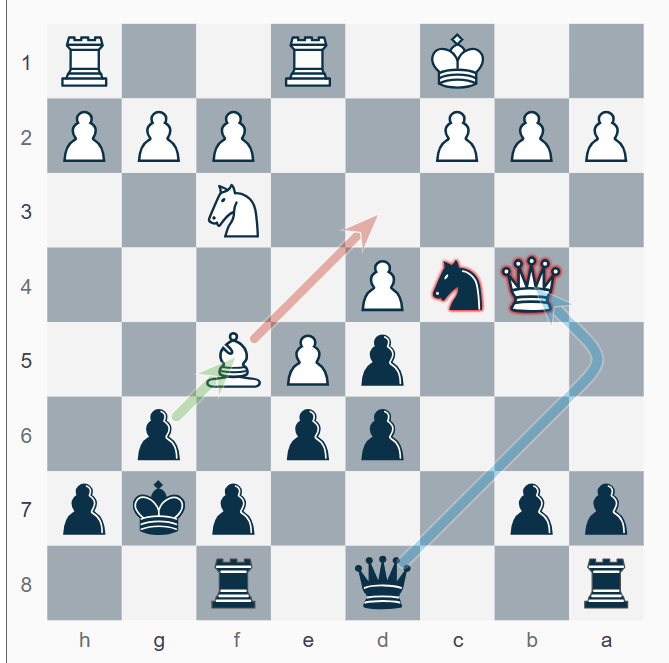
- Mistake: A missed opportunity to maintain pressure by playing 21…Ra6, which would have supported the c6 pawn and countered White’s initiative on the queenside.
- Better Alternative: 21…Ra6, ensuring better balance and enabling active rook play.
4. Move 30…Qxb5
- Mistake: Prematurely transitioning to the endgame by simplifying too much.
- Better Alternative: 30…Qxd4, retaining queens for counterplay and increasing Black’s chances of maintaining dynamic pressure.
Black’s Key Mistakes
- Passive moves like 11…Nb6 and 15…a5 ceded the initiative to White.
- Failure to play dynamically, particularly in positions requiring precise counterplay (e.g., 21…Qc7 and 57…Rg4).
- Premature simplifications such as 30…Qxb5, leading to a suboptimal endgame.
These little things, when combined, cost Black the chance to convert a promising position into a victory. However, a flawless play and holding a draw was a good result.
Stay Connected
Thank you for reading! I’ll continue sharing insights and results from tournaments and chess adventures here.
I wish you all a Happy Thanksgiving
Amici Sumus – We are friends!
If you find value in my content, consider supporting me with a virtual coffee ☕️ or a beer 🍺. Your contributions help keep this blog thriving.
Stay updated by subscribing to my blog and sharing it with your chess friends.