Second Game Finished - RoW Semi-Finals
A Draw Against International Master Unes Hassim
Introduction
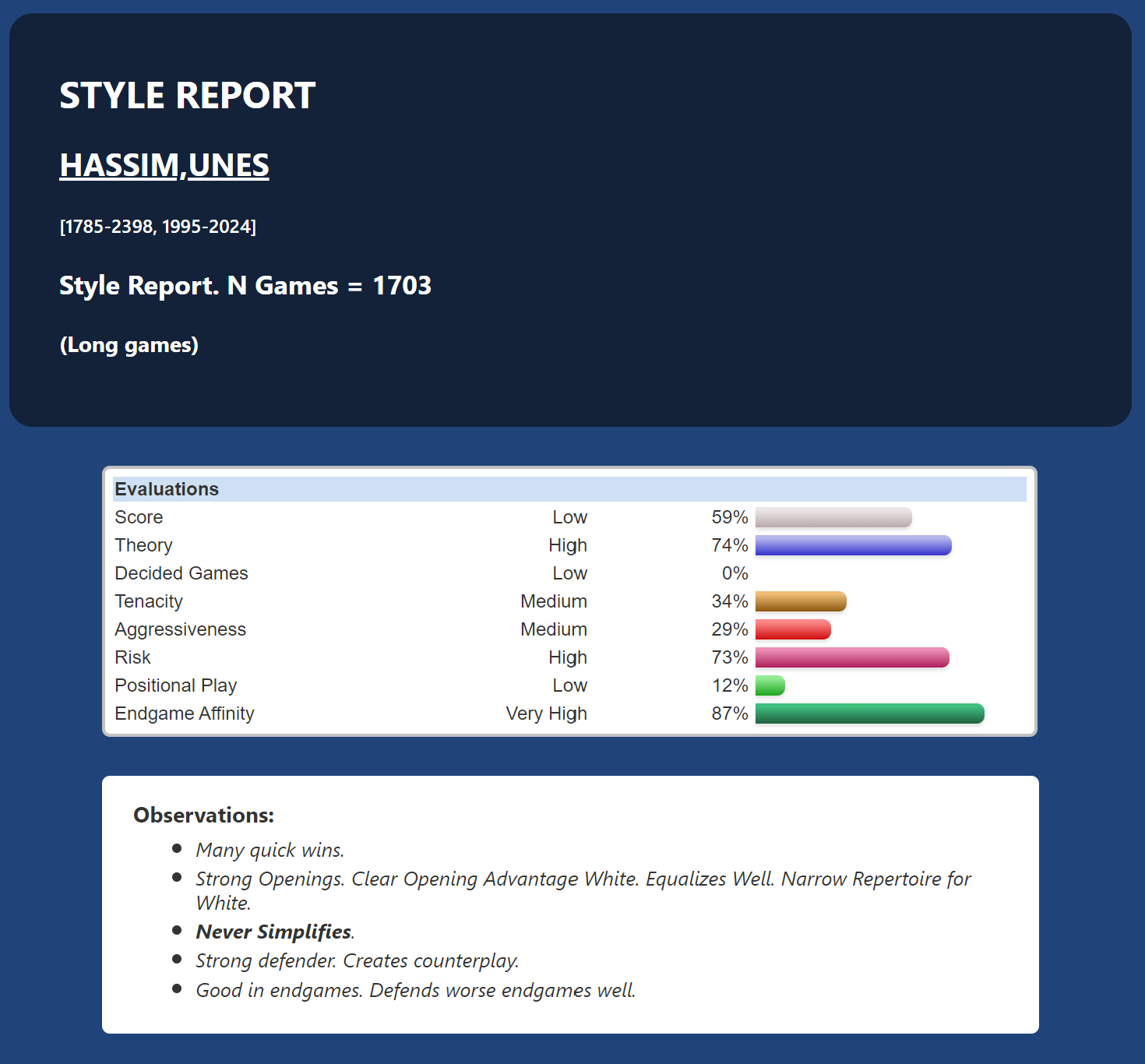
The Rest of World Championship Semi-Finals are well underway, and I’ve just wrapped up my second game—a hard-fought draw against the esteemed Correspondence Chess Master Unes Hassim. It was a pleasure to face him again virtually, as he’s known for his uncompromising style. The ChessBase Style Report notes Unes as a player who avoids simplifications, which I can confirm and it always keeps our games intense and challenging.
About My Opponent
Unes Hassim is a highly respected figure in correspondence chess, holding the titles of Correspondence Chess Master (CCM) and Correspondence Chess Expert (CCE), both earned in 2018. His 2024 rating is an impressive 2431. Over his career, he has played 989 correspondence games, winning 132 and making over 35,000 moves across 81 tournaments—a testament to his strategic depth and adaptability.
For those interested, you can view his other games in the player database.
Game Analysis
While this game wasn’t a tactical fireworks display, it offered a valuable chance to test ideas without taking undue risks. Here’s a breakdown of some key moments:
On Move 8, I chose 8. exd4—a line that’s proven reliable, especially in the Veterans World Cup semi-finals. Unes’s reply with 17…f5 was a rare choice, seen only four times before (two of which were my own games). Now, with our match included, there are five games in this line—all ending in draws, highlighting its solidity. In future encounters, I’ll be looking for new ideas to create more imbalances.
Game Summary
- Opening: English Opening, A13 variation, transposing into a symmetrical pawn structure.
- Early Moves: I aimed for a solid setup with Nf3 and c4, while Black countered with d5, e6, and c5, developing his pieces harmoniously.
- Middle Game: 8. exd4 was an improved choice over the older 8. Bb5, leading to a more favorable position. My move 10. Qe2+ temporarily disrupted Black’s development, but he maintained stability by exchanging pieces.
- Critical Moment: At 17…f5, Black had several plans available. This pawn push led to further exchanges, with White opting to simplify by capturing and exchanging queens.
- Endgame: The resulting endgame after 20. Rfe1 was balanced, with limited winning chances for either side. The draw was a natural outcome.
Notable Annotations
- 8. exd4: An improvement over the older 8. Bb5.
- 12. Qe5: Echoes a historic move from Schroeer (2114) vs. Duszynski (2401).
- 17. gxf3: Recapturing this way led to a symmetrical structure, making it difficult to create winning chances.
Analysis Insights
Both players made nearly flawless moves, with minimal errors (Weighted Error Values: White = 0.01, Black = 0.00), showcasing precise play throughout. The balanced nature of the game, without significant imbalances, led to an inevitable draw.
Enjoy the fully annotated game with sidelines calculated.
[Event "RoW Championship 2024 Semi-Final  4"]
[Site "ICCF"]
[Date "????.??.??"]
[Round "?"]
[White "Schroeer, Egbert"]
[Black "Hassim, Unes"]
[Result "1/2-1/2"]
[ECO "A13"]
[WhiteElo "2165"]
[BlackElo "2425"]
[Annotator "Schroeer,Egbert"]
[PlyCount "39"]
[GameId "2103288925138472"]
[EventDate "2024.09.30"]
[EventType "corr"]

1. Nf3 d5 2. e3 Nf6 3. c4 e6 4. b3 c5 {[%cal Bc7c5,Bc5d4]} 5. Bb2 Nc6 6. cxd5
exd5 7. Be2 {The position is equal.} d4 {A13: English Opening: 1...e6. still in
my prep with exd4} 8. exd4 $1 {now scores much better than the old 8.Bb5.} cxd4
{d3 looms as a decisive threat.} (8... Nxd4) 9. Bb5 {[%cal Ye1g1] 0-0! eyes a
pivotal maneuver.} Bc5 10. Qe2+ Be6 {Threatens to win with ...0-0.} 11. Bxc6+
bxc6 12. Qe5 {[%csl Rc5,Rd4];½-½ Schroeer,E (2114)-Duszynski,J (2401) Veterans
World Cup13 sf09 corr ICCF 2023 ICCF 2023} Bd6 (12... Qd5 13. Bxd4 Bxd4 14. Qxd4
{Nc3 poses a crucial intent.} O-O-O $1 15. Qxa7 {And now Nc3 would win.} Bg4
{Rhe8+ looms as a decisive danger.} 16. Qa6+) 13. Qxd4 O-O 14. O-O Bd5 15. Qh4
Bxf3 {This pair of bishops is nice.} 16. Bxf6 gxf6 17. gxf3 f5 $146 (17... Be5
18. Nc3 Qd3 {[%cal Yg8h8] Kh8! is now a decisive menace.} 19. Rae1 {Hoping for
Re3.} Kh8 20. Ne4 Qxf3 21. Ng3 {aiming for d4.} Rad8 22. Re3 Qd5 {[%cal Yf8g8]}
23. d3 Rg8 {Threatens to win with ...f5.} 24. Qe4 Qxe4 25. dxe4 Rd2 26. a3 Ra2
27. a4 c5 28. Kg2) ({Predecessor:} 17... Be5 18. Nc3 Kh8 19. Rae1 Qd3 20. Ne4
Rg8+ 21. Ng3 Qxf3 22. Re3 Qd5 23. Rd1 f5 {½-½ Keymer,V (2700)-Andreikin,D (2729)
Titled Tuesday intern op 18th Oct Early Chess.com INT blitz 2022 (8)}) 18. Qxd8
Raxd8 19. Nc3 Rfe8 20. Rfe1 {Not much happened in this game. Weighted Error
Value: White=0.01 (flawless) /Black=0.00 (flawless) . OK: White=11 Black=6 Best:
White=1 --- we agreed on a draw} 1/2-1/2
Final Thoughts
The intensity of correspondence chess tournaments can’t be underestimated. In another game within the same tournament, I made a costly blunder that could impact my chances of achieving my first CCM norm—a humbling reminder of how even minor mistakes, like a move-order mix-up, can alter a game’s outcome. This is my second such error this year, and I’m determined to stay vigilant moving forward.
Amici Sumus – we are friends. It’s an honor to compete alongside such skilled players from around the world. Thank you for reading, and stay tuned for additional updates as I share more results and insights from this tournament.
If you enjoyed the analysis, please consider supporting the blog with a virtual coffee ☕️ or even a beer! Your support truly helps keep this blog going.
Click the coffee mug icon below to contribute—it’s appreciated!
Stay Connected! If you haven’t already, subscribe to the blog and share with fellow chess enthusiasts.